
BlueSky is a small defense contractor dedicated to delivering products and solutions that close mission-critical capability gaps for the warfighter.
What mast system should I use for border and port security?
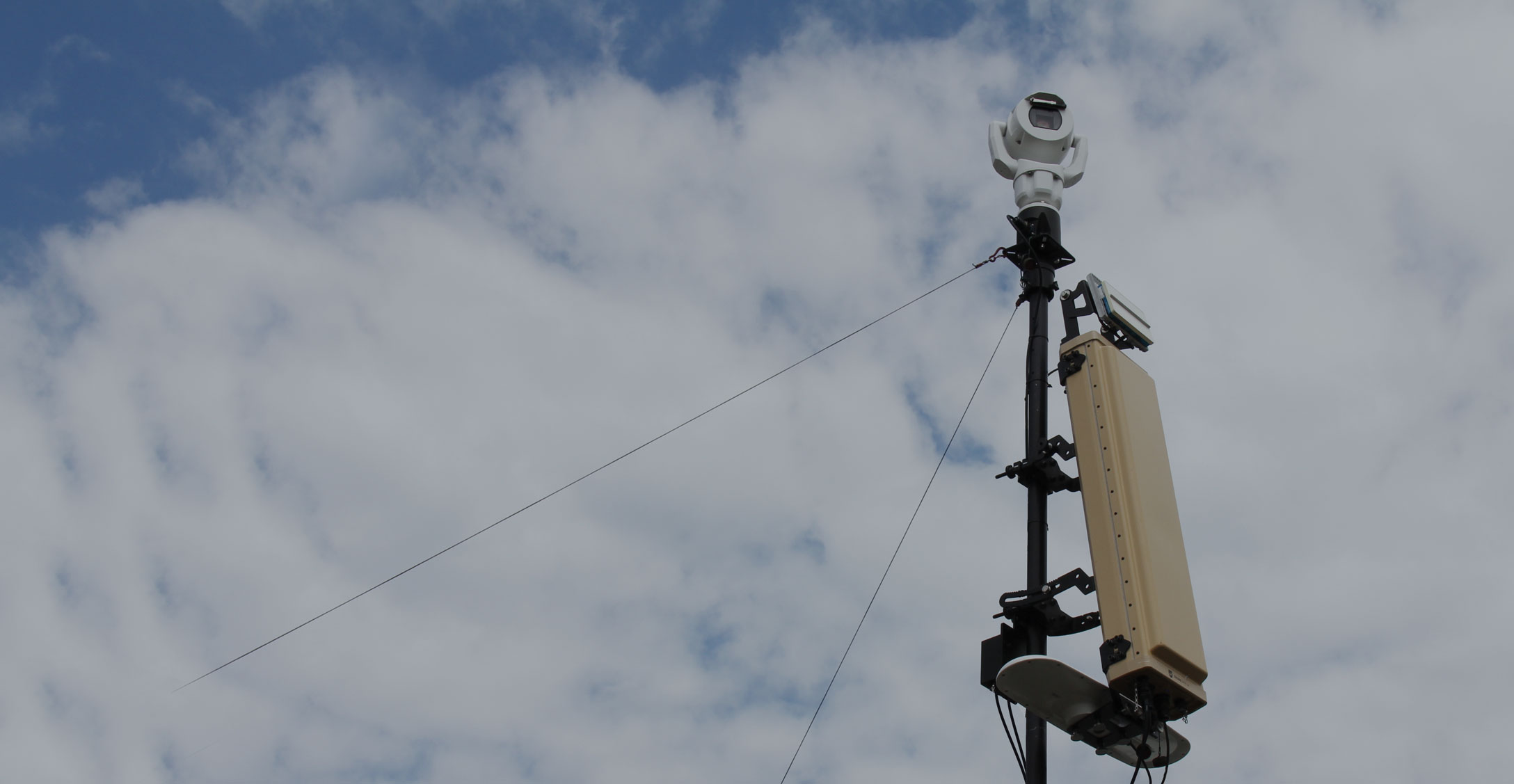
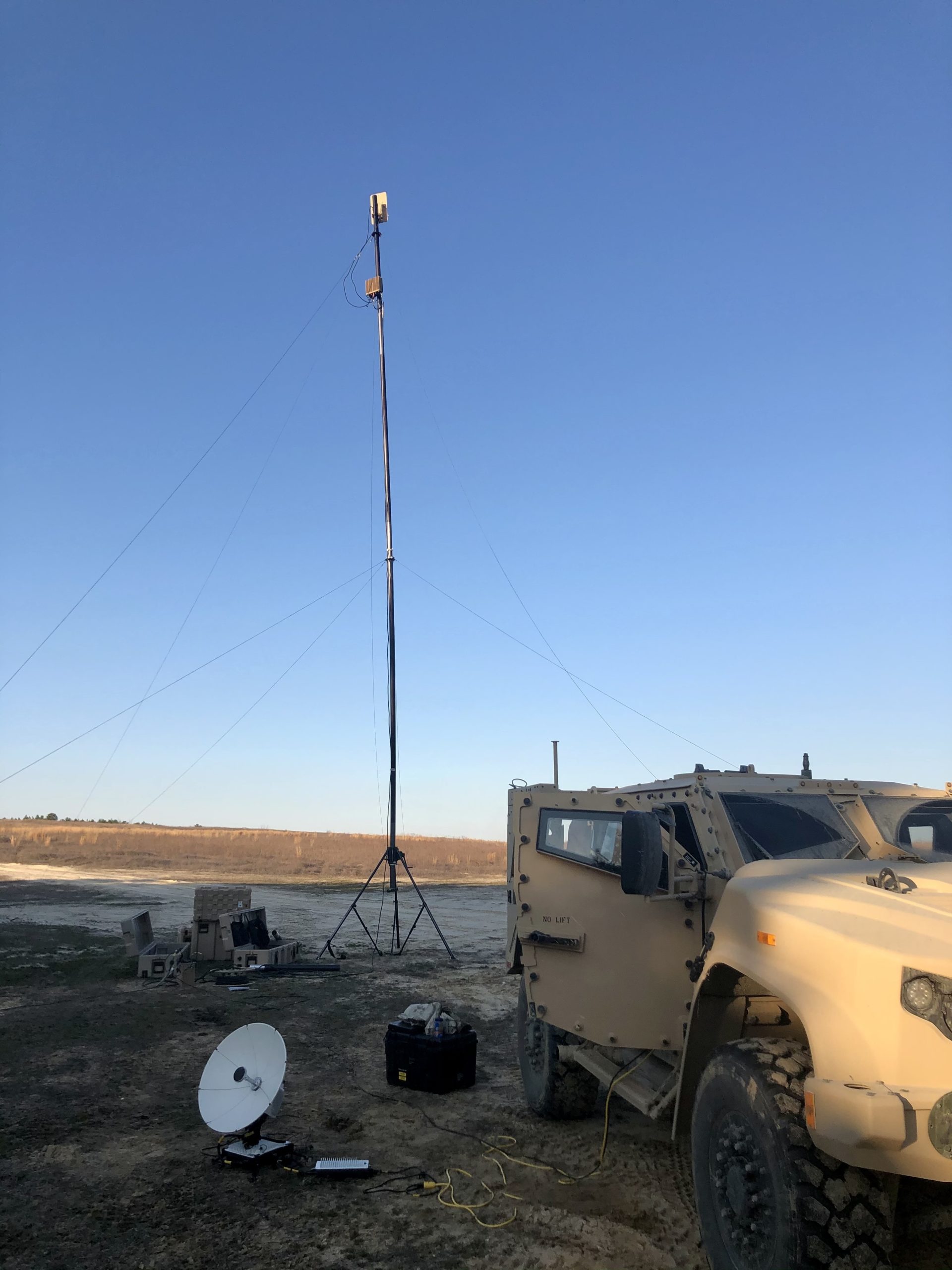
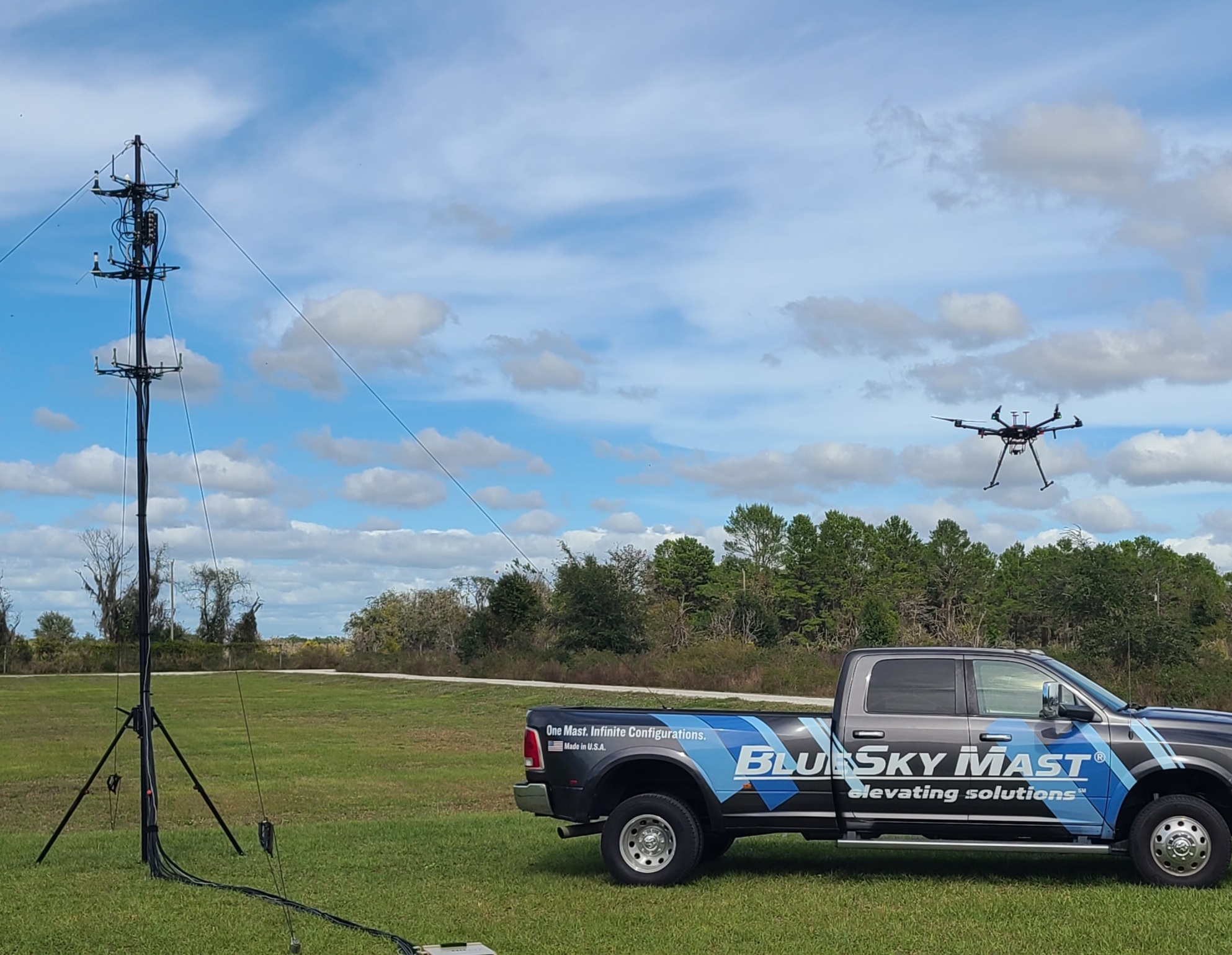
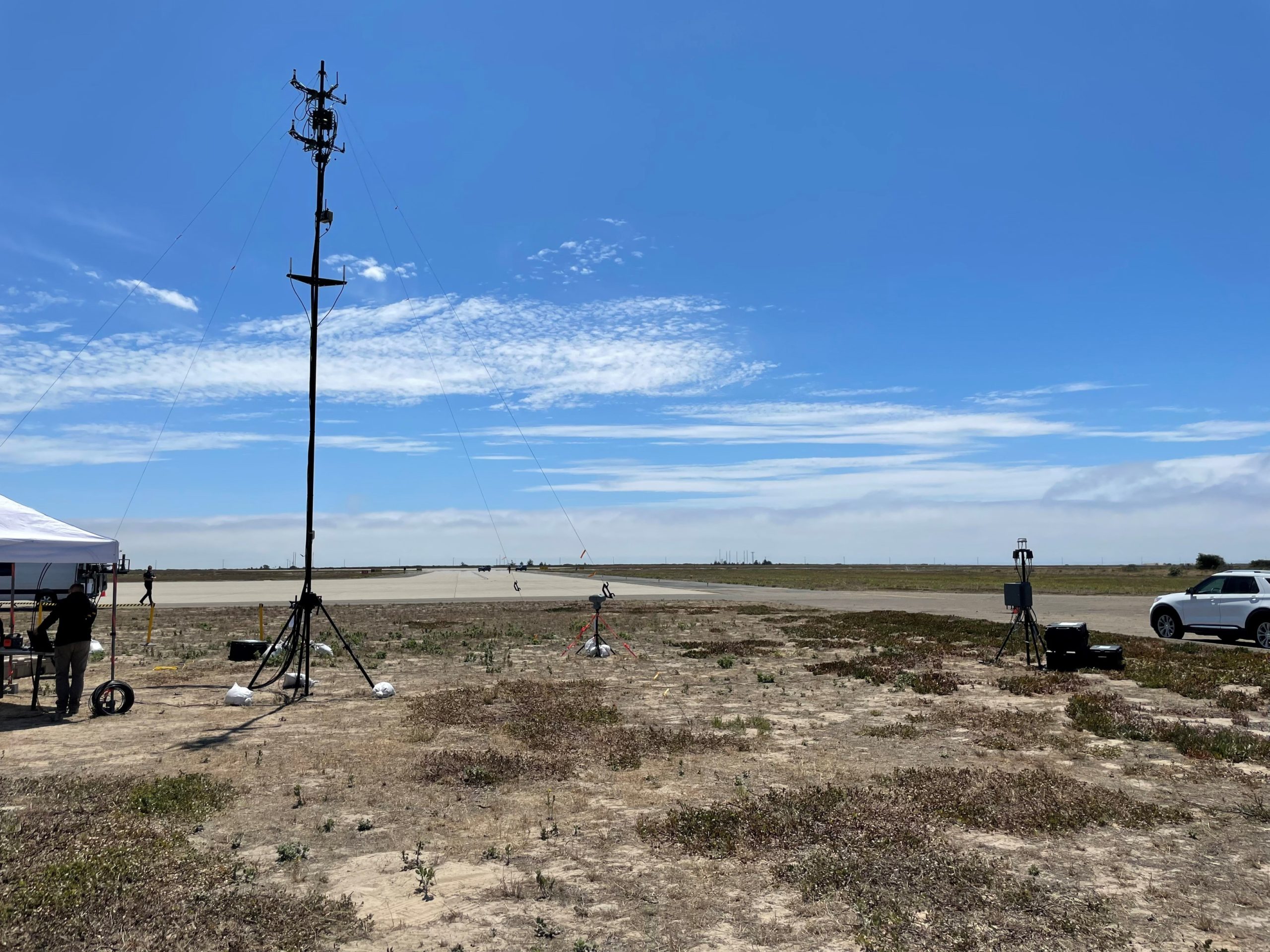
For border and port security, BlueSky masts put radar, cameras and RF sensors above the fence line or the waterline in minutes and move when the threat moves: the 350 Lift Series at 15 to 18 m carries CHAOS radar and CACI maritime sensors (50 to 75 lb at those heights, two people, 20 to 45 minutes), while FM Series vehicle masts and quick-deploy 200 Lift Series - AL2 tripods give patrol trucks elevation at every stop.
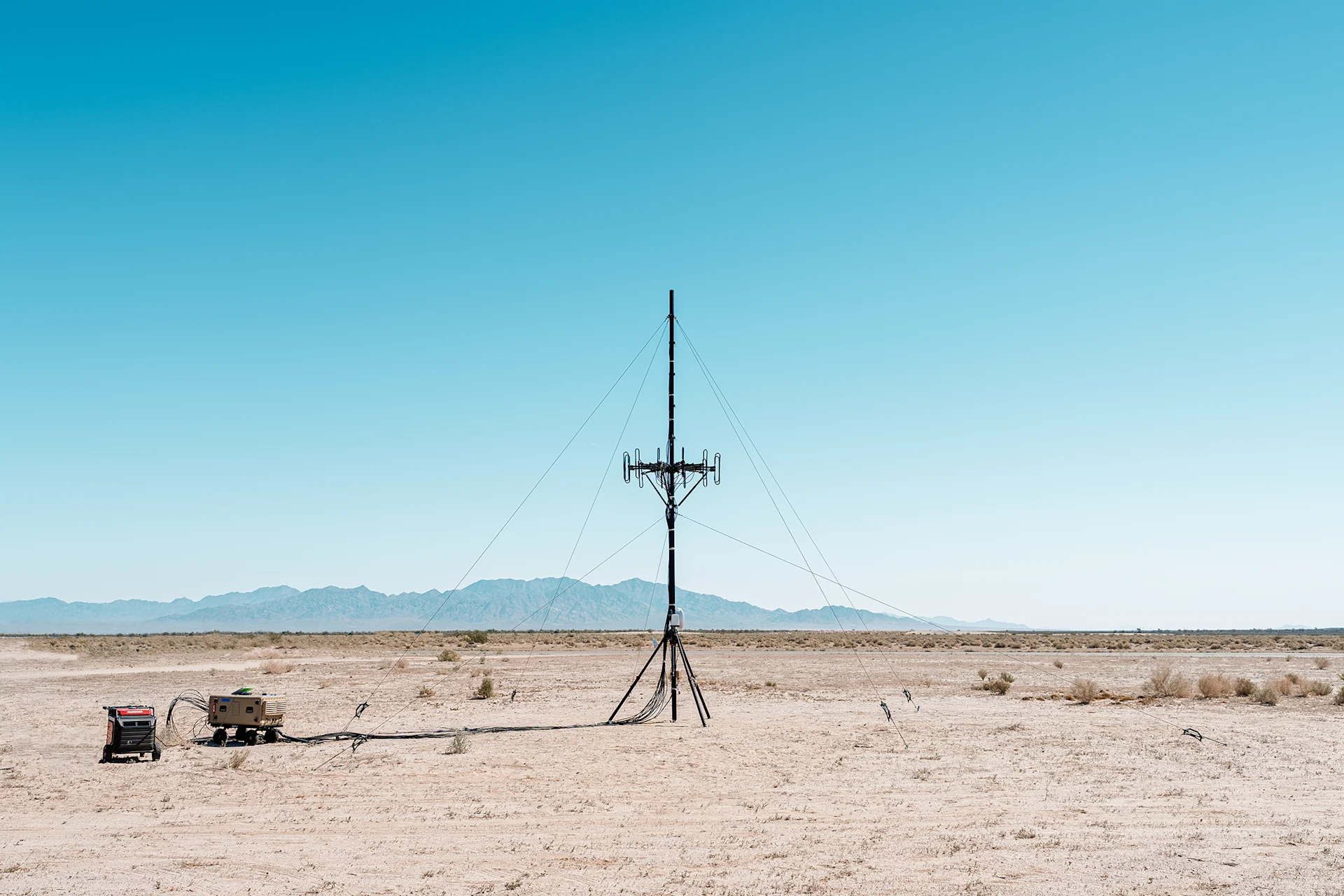
Each kit is a BlueSky Mast configured and documented with a partner's C-UAS system. Start from one and adjust.
Borders, ports and critical sites are long lines and wide perimeters. Sensors need height to see over fences and terrain, and they must move when threats do.
Fence lines, terrain and the waterline hide approaches from ground-level cameras and radar.
The 350 Lift Series raises radar, cameras and RF sensors to 15 to 18 m, above the fence line or waterline.
Threats shift, and fixed towers can't follow them to the next gap in coverage.
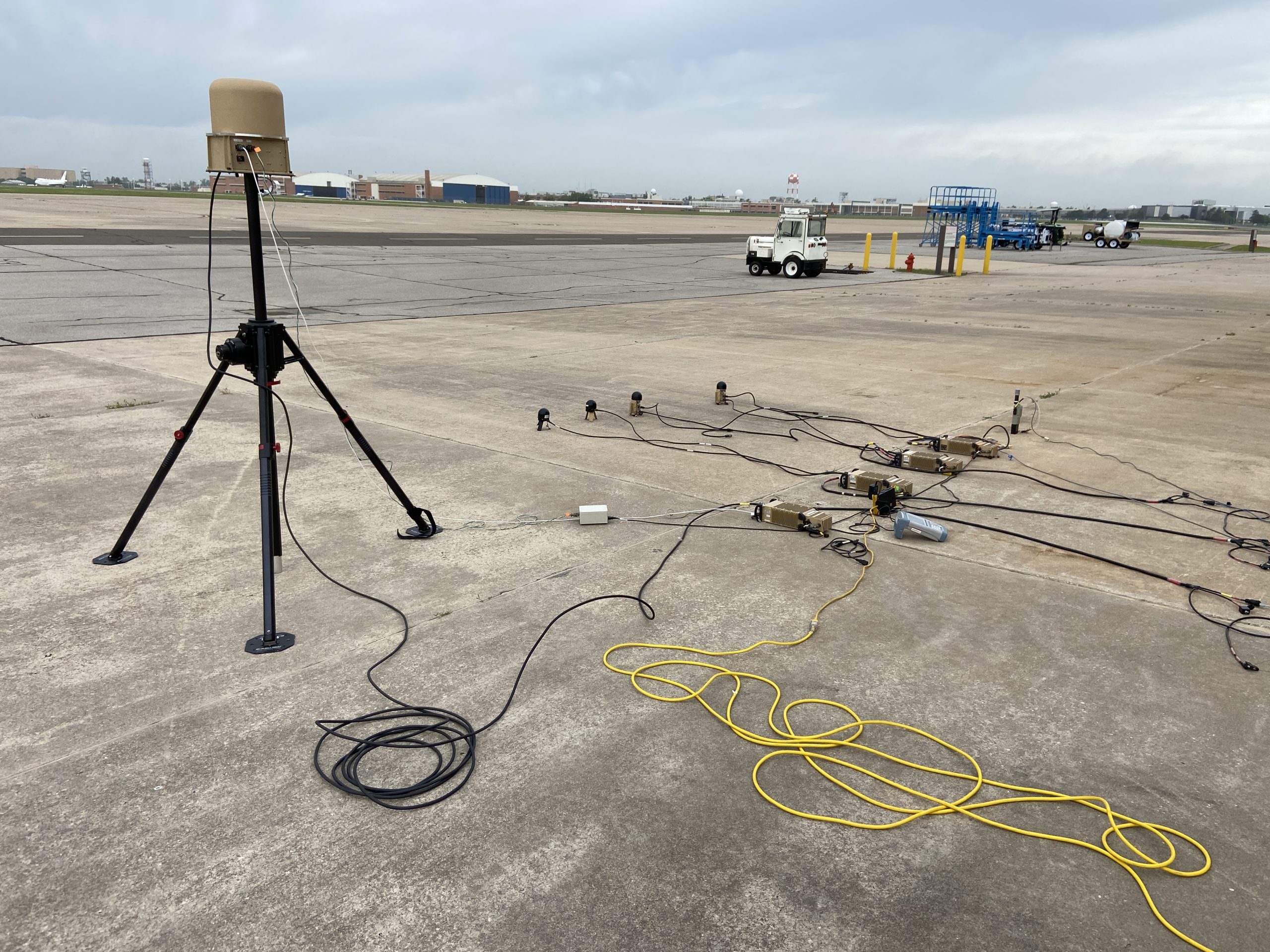
Tripod masts go up in minutes without a tower; FM Series vehicle masts give patrol trucks height at every stop.
Layered protection stacks radar, cameras and radios, often on separate structures that add cost and time.
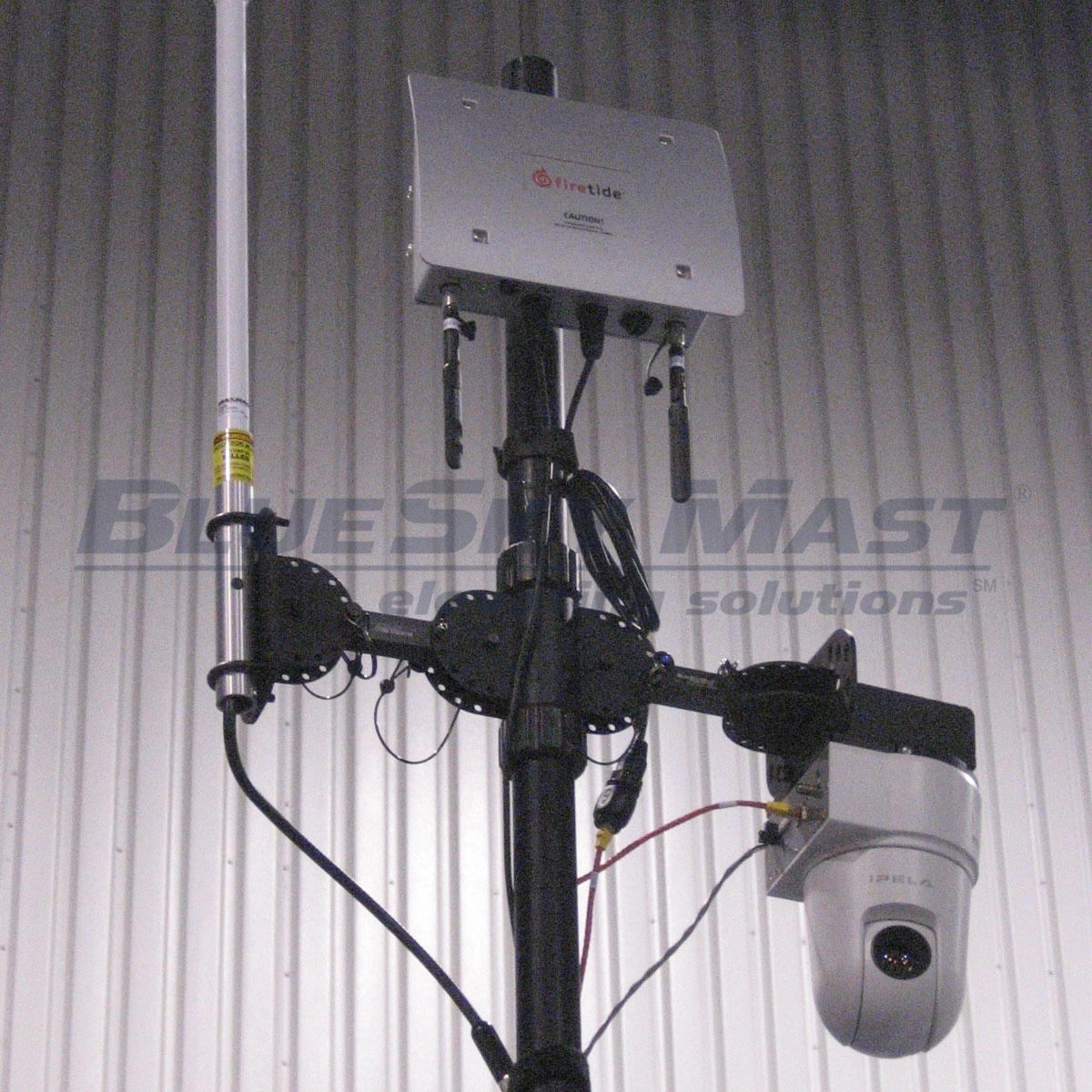
Side arm kits and Secure Lock mounts carry radar, cameras and radios together on a single mast.
Straight answers, with the spec behind each one.
Up to 175 lbs at 5 m, or 45 lbs at 18 m, on the 350 Lift. Its patented guyed tripod holds the payload in 90 mph wind.
350 Lift capabilities chart →One person sets up the Sidekick in 2 to 5 min. Two people raise the 200 Lift to 10 m in 10 to 15 min with a self-braking winch.
Deployment times by series →Proven with leading C-UAS radars, RF detectors and effectors. Configuration details are ready to download, and the mounts are tool-less.
Sectional masts pack into wheeled carry bags. The Sidekick is airline-checkable at 42 × 9 × 9 in.
Portable mast systems are tested to MIL-STD-810G, and BlueSky has fielded more than 45,000 systems.
Tell us the payload, height and site. We'll recommend the mast, mounts and kit, and build the configuration with you. (Placeholder: Web Content to confirm.)
Request a quote →Tripod masts reach up to 10 m (AL1 and AL2 Standard), 15 m (200 Lift Series - AL2) and 18 m (350 Lift Series). The vehicle-mounted MEC Series reaches up to 25 m. The Sidekick is a 2 m man-portable mast.
Payload depends on the mast model and height: the taller the mast, the lighter the allowed payload. On tripod masts the 350 Lift Series carries the most, up to 175 lbs at 5 m. The vehicle-mounted MEC Series lifts up to 400 kg. See the load table on each mast system page for the exact rating at every height.
200 Series (AL1 and AL2) masts are rated for 70 mph winds up to their maximum deployable payloads. 350 Lift Series masts are rated for 90 mph. See the wind load chart for each system height.
Standard Series masts are manual push-up systems: the mast sections are inserted by hand up through the tripod. Lift Series masts use a stronger tripod and a self-braking mechanical winch to raise the sections, for a more controlled, easier and safer deployment with heavier payloads.
Yes. Depending on model and height, a single BlueSky Mast can carry multiple devices at once, such as radios, cameras and radar, using tool-less top plates, pole mounts and side arm kits. That is a core purpose of the modular design.
BlueSky recommends guying every mast using a four-guy configuration at 80% of the total mast height. Mast systems 7 m and above include a primary guy kit. Mast systems 11 m and above include primary and secondary guy kits.
Share the sensor, height and site. We'll come back with the mast system, mounts and a configuration you can field.