
BlueSky is a small defense contractor dedicated to delivering products and solutions that close mission-critical capability gaps for the warfighter.
What mast should I use for sensors and communications at a remote industrial site?
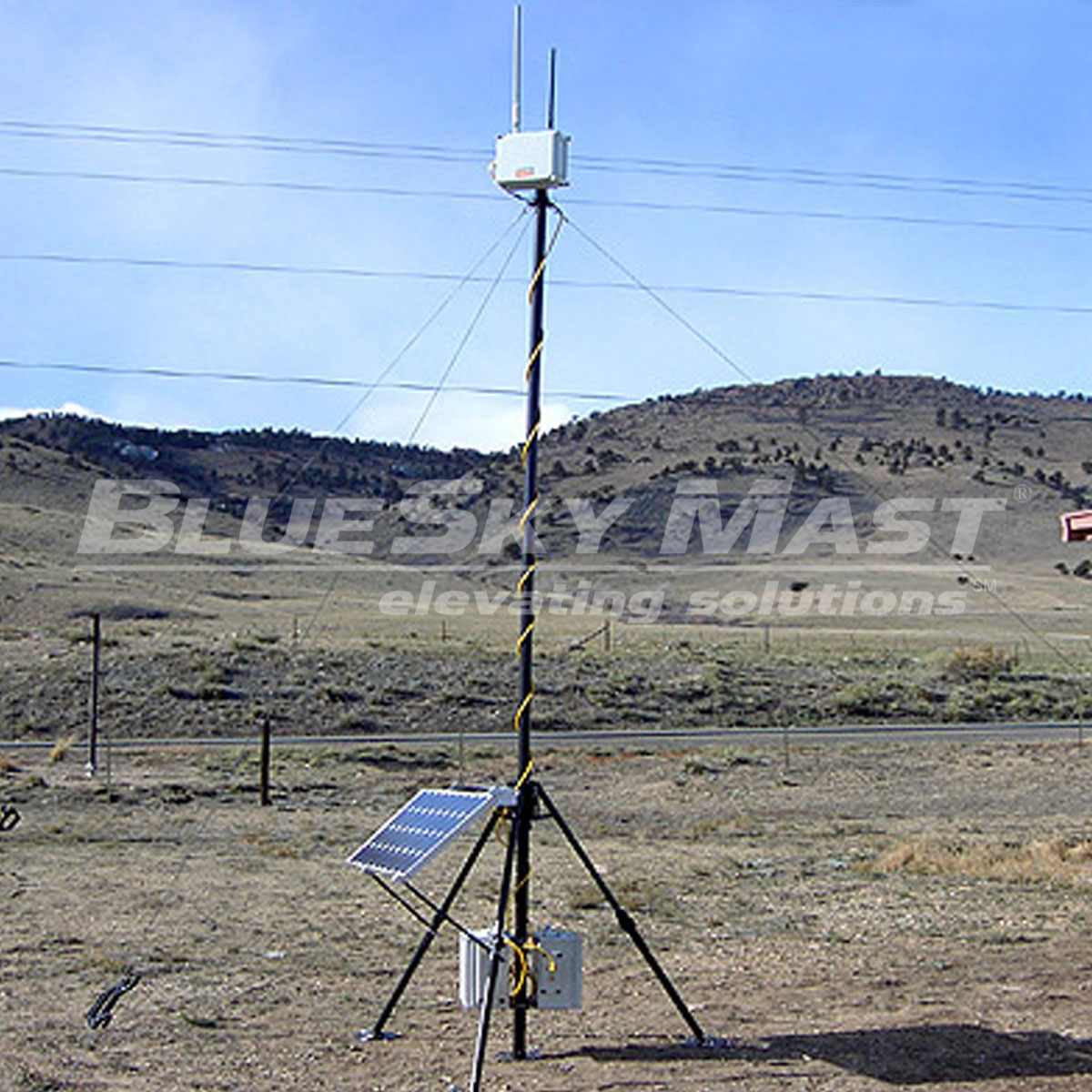
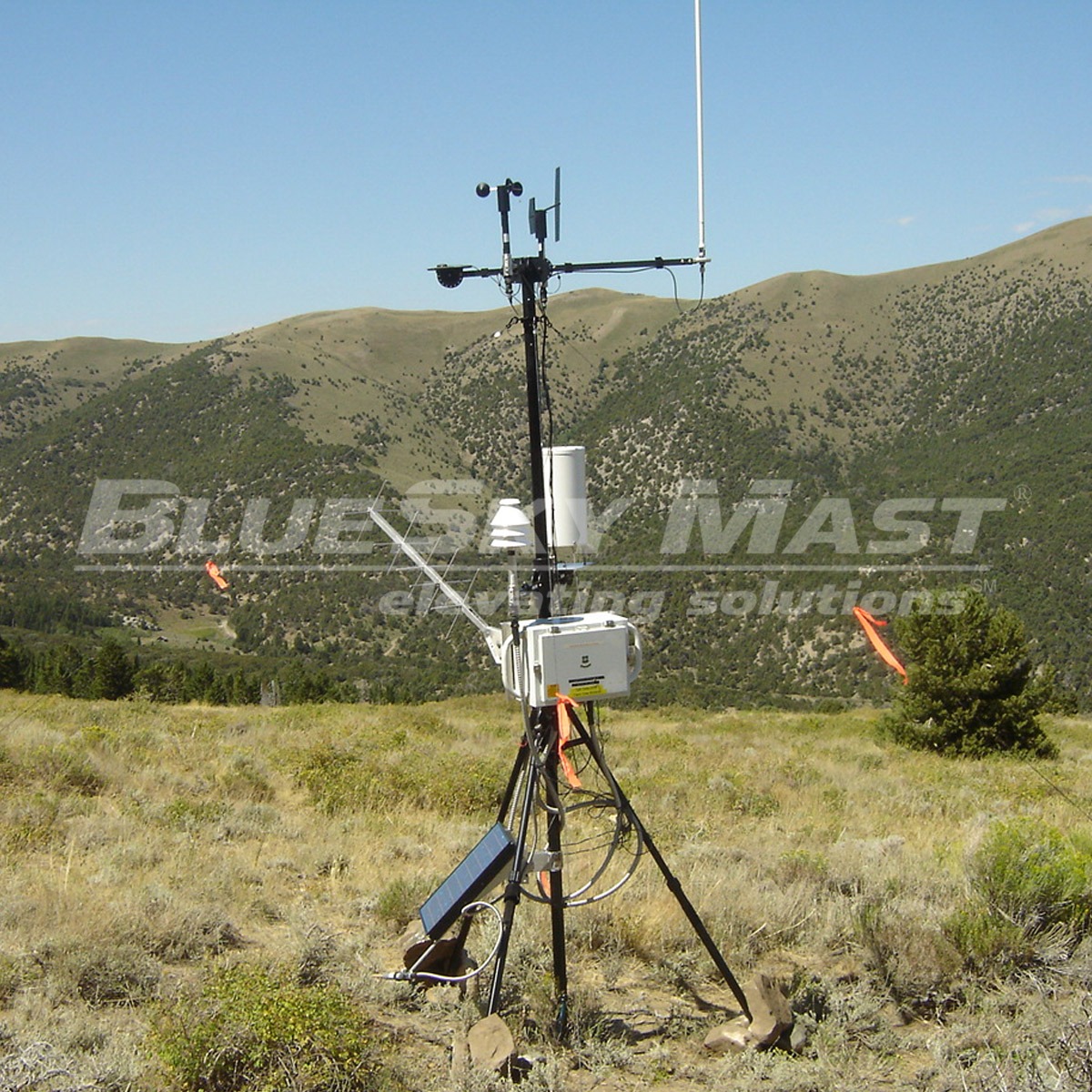
For weather sensors, site cameras and radio links at remote industrial sites, the 200 Standard Series - AL2 is the right mast: it is pushed up by hand to 10 m with no power needed and carries 50 lb at that height. For heavier camera and radio packages, the 200 Lift Series - AL2 raises them by winch.
Each kit is a BlueSky Mast configured and documented with a partner's C-UAS system. Start from one and adjust.
Mines, utilities, farms and construction sites sit where there is no tower and often no grid. Sensors, cameras and radio links still need to get up high.
Remote sites lack towers, so weather stations, cameras and radio links sit too low to see or connect.
The 200 Standard Series - AL2 is pushed up by hand to 10 m with no power and carries 50 lbs at that height.
Off-grid sites can't run powered lifts, and generators add fuel, cost and upkeep.
Push-up and winch masts need no power to raise; solar panels and batteries can sit at the base.
Equipment stays outdoors for weeks or months in weather, dust and sun.
Black anodized aluminum masts with stainless steel hardware are built for long stays outdoors.
Straight answers, with the spec behind each one.
Up to 175 lbs at 5 m, or 45 lbs at 18 m, on the 350 Lift. Its patented guyed tripod holds the payload in 90 mph wind.
350 Lift capabilities chart →One person sets up the Sidekick in 2 to 5 min. Two people raise the 200 Lift to 10 m in 10 to 15 min with a self-braking winch.
Deployment times by series →Proven with leading C-UAS radars, RF detectors and effectors. Configuration details are ready to download, and the mounts are tool-less.
Sectional masts pack into wheeled carry bags. The Sidekick is airline-checkable at 42 × 9 × 9 in.
Transport dimensions →Portable mast systems are tested to MIL-STD-810G, and BlueSky has fielded more than 45,000 systems.
Tell us the payload, height and site. We'll recommend the mast, mounts and kit, and build the configuration with you. (Placeholder: Web Content to confirm.)
Request a quote →BlueSky Mast builds military mast systems that put antennas, cameras, radars and other sensors up high, fast. There are two families: portable tripod-based masts (200 Standard Series - AL1, 200 Standard Series - AL2, 200 Lift Series - AL2, 200 Sidekick Series - AL2 and 350 Lift Series) and vehicle-mounted telescoping masts (FM Series and MecMast Series). BlueSky has fielded more than 45,000 systems.
AL1 Standard: the lightest push-up mast, with thin-wall 2 in. OD sections, for single antennas and lightning protection.
AL2 Standard and AL2 Lift: thick-wall 2 in. OD sections (twice the AL1 wall thickness), stiffer and rated for heavier payloads, from 20 to 100 lbs depending on height.
350 Lift: 3.5 in. OD sections for the heaviest payloads, from 45 lbs at 18 m up to 175 lbs at 5 m, rated for 90 mph wind.
Standard Series masts are manual push-up systems: the mast sections are inserted by hand up through the tripod. Lift Series masts use a stronger tripod and a self-braking mechanical winch to raise the sections, for a more controlled, easier and safer deployment with heavier payloads.
Tripod masts reach up to 10 m (AL1 and AL2 Standard), 15 m (200 Lift Series - AL2) and 18 m (350 Lift Series). The vehicle-mounted MecMast reaches up to 25 m. The Sidekick is a 2 m man-portable mast.
Payload depends on the mast model and height: the taller the mast, the lighter the allowed payload. On tripod masts the 350 Lift Series carries the most, up to 175 lbs at 5 m. The vehicle-mounted MecMast lifts up to 400 kg. See the load table on each mast system page for the exact rating at every height.
200 Series (AL1 and AL2) masts are rated for 70 mph winds up to their maximum deployable payloads. 350 Lift Series masts are rated for 90 mph. See the wind load chart for each system height.
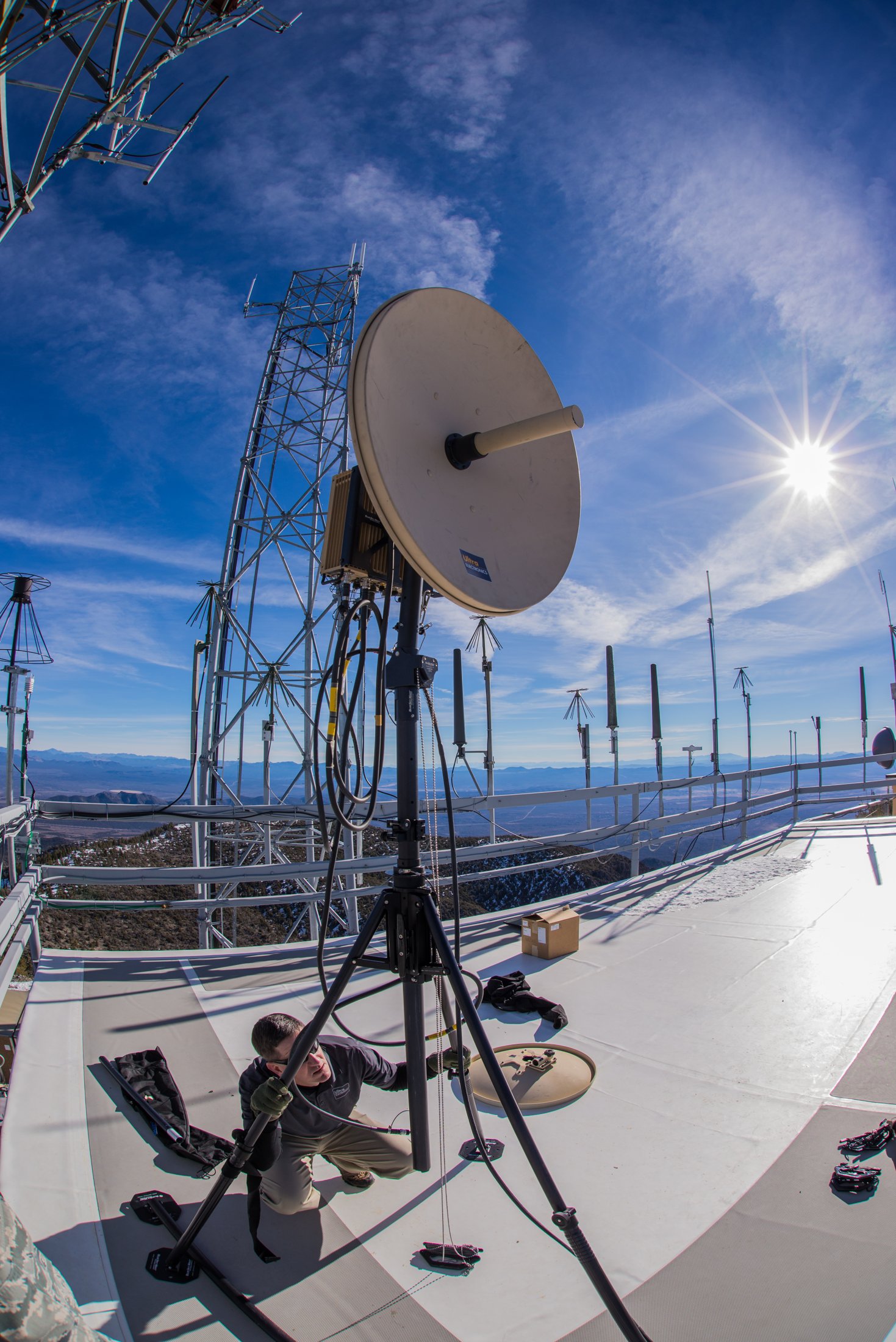
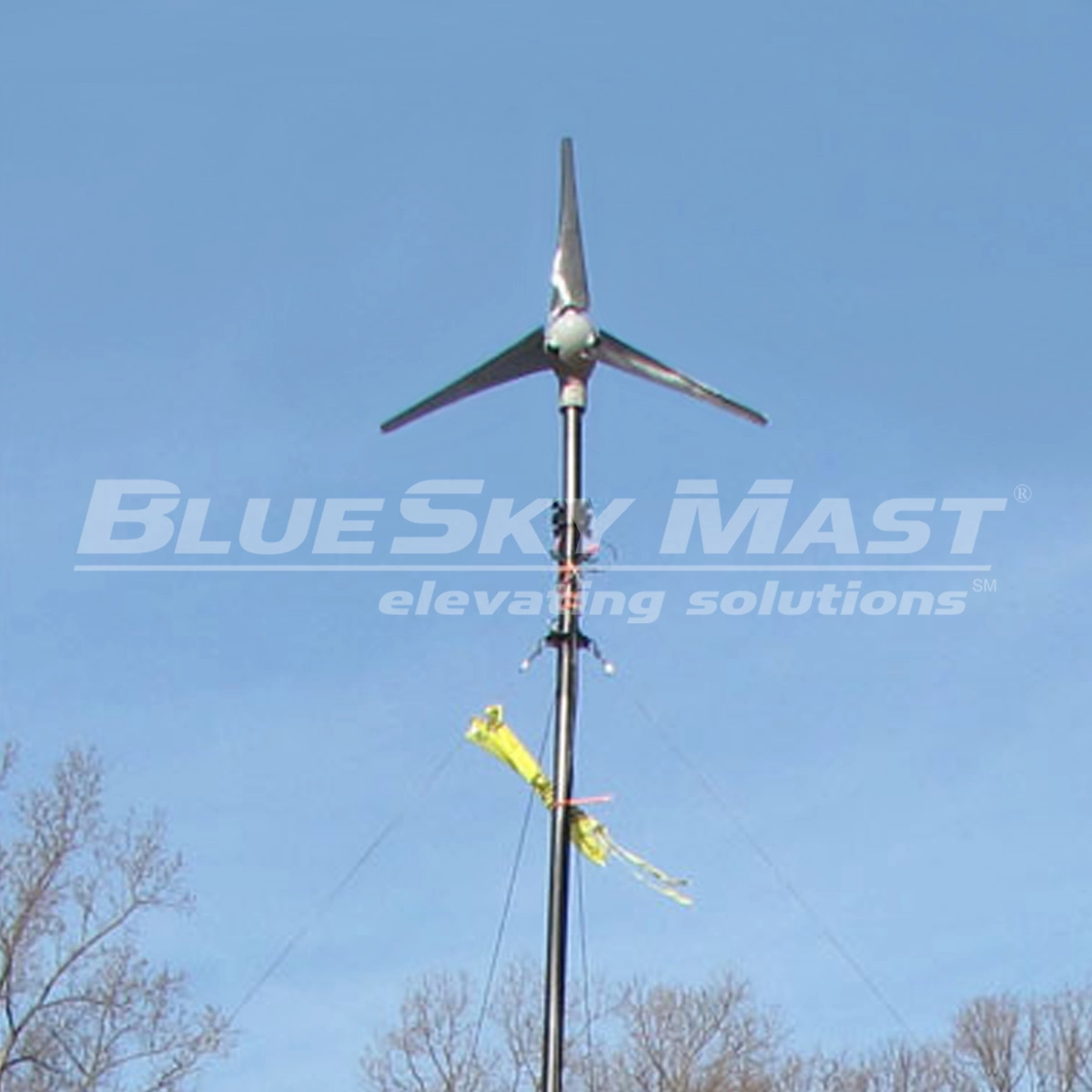
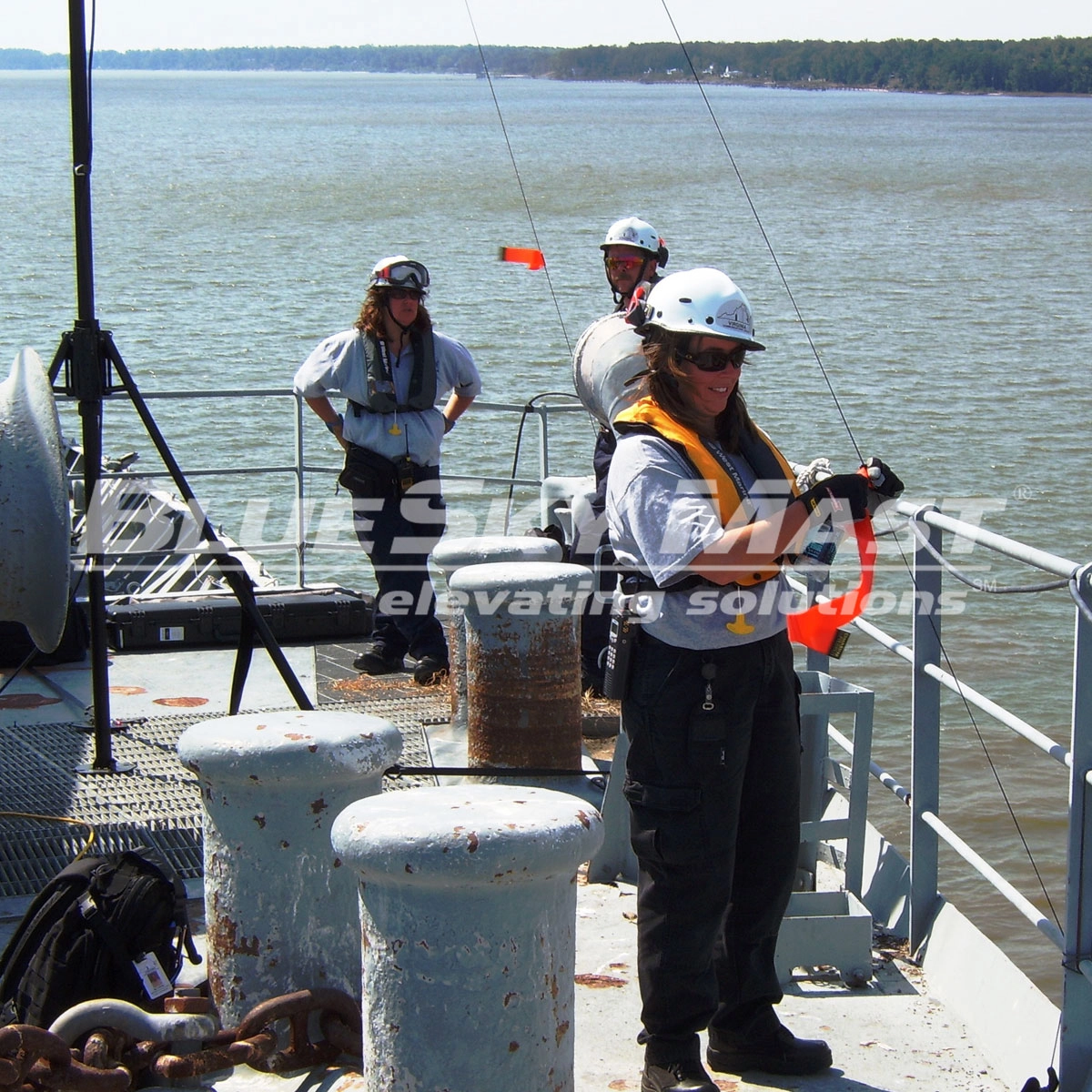
Every BlueSky deployment is the same proven stack, configured for your payload.
Radar, RF detection, EO/IR or effectors from the partners you already field. We've integrated with leading C-UAS systems, and the configuration details are ready to download.
See integrated kits →Patented, interchangeable top plates, side arms and adaptors. No tools, less training, and the same interfaces across the mast line, so the mounts your teams own carry over.
Find the right accessory →Choose by height and payload: the man-portable 200 Sidekick, the winch-raised 200 Lift, or the heavy-payload 350 Lift.
Compare mast systems →Tripod-based sectional masts pack down to a compact footprint. No vehicles, trailers or fixed structures needed. They're MIL-STD-810G tested and ship in wheeled carry bags.
Deployment questions →Share the sensor, height and site. We'll come back with the mast system, mounts and a configuration you can field.
.svg)